
If those who follow Hinduism have still not become disillusioned with the Hindutva organizations—the Rashtriya Swayamsevak Sangh (RSS) and along with Bharatiya Janata Party (BJP) its various affiliates—even after the exposure of corruption in the Ram Temple at Ayodhya, then they need to think more deeply.
There is no doubt that Hinduism is Sanatan. The RSS was established in 1925, and its Hindutva ideology was founded on opposition to Muslims and Christians. Today, the proponents of Hindutva have begun calling themselves Sanatanis. Consider this: Christianity and Islam came to India long after Hinduism. How, then, can followers of an ideology born in 1925 call themselves Sanatanis? It is now for you to decide whether you are a Sanatani Hindu or a Hindutvavadi. Sanatan Dharma has existed since time immemorial.
People following many religions came to India—some to rule, some to trade, and some seeking refuge. Yet the overwhelming majority of the country preserved Hinduism. It was Hinduism’s caste system, based on discrimination, that led many people to convert to Christianity and Islam, and it was for the same reason that Buddhism and Sikhism also emerged. Nevertheless, Hinduism’s spirit of tolerance eventually accommodated them all. Politics over the past few decades has certainly intensified Hindu-Muslim polarization, but even so, Hindu-Muslim social relations have not deteriorated to the extent witnessed in Manipur between the Meiteis and Kukis or between Kukis and Nagas.
A religion that has survived through its own vitality for thousands of years—does it really need an ideology born in 1925 to save it? On the contrary, that ideology has tried to fill the tolerant Hindu with fanaticism and alter the very character that has kept Hinduism alive. There is no need to explain how dangerous this is for society and for Hinduism. Just look at world history: no fanatical society has remained prosperous for long.
Building the Ram Temple in Ayodhya was a political project of the Hindutva forces. Its objective was to capture political power in India so that the country could be turned into a Hindu nation. By demolishing the Babri Masjid in Ayodhya, they succeeded in advancing that objective. The Supreme Court completed the remaining task by permitting the construction of the Ram Temple on the disputed site. Yet the same judgment also stated that no conclusive evidence had been presented to prove that Lord Ram was born precisely at that spot, and it described the demolition of the Babri Masjid as a criminal act. But by then, the Hindutva forces had already created a nationwide atmosphere in favor of the temple. Consequently, the temple was constructed in great haste. But is it not worth reflecting on the fact that not a single Shankaracharya attended the temple’s inauguration ceremony?
Since the Ram Temple in Ayodhya was built primarily to fulfill a political objective, genuine representatives of Hinduism rightly chose to distance themselves from it. The management of the temple, too, was entrusted not to religious entities but to persons associated with the RSS and its affiliates like the Vishwa Hindu Parishad. What followed is now before everyone to see.
The BJP projected the construction of the Ram Temple as its greatest achievement and reaped electoral benefits from it. But a temple whose very foundation lacked moral legitimacy was bound, sooner or later, to have its flaws exposed.
Those who ignore fellow human beings and other living creatures while searching for God in stone idols or images on paper are bound to be deceived one day. It is fortunate that the truth about the Ayodhya temple came to light early; otherwise many more devotees of Lord Ram would have been misled.
In reality, service to humanity is the greatest religion, because the lasting satisfaction it provides cannot be found elsewhere. The Sikh tradition of the langar (community kitchen) is a magnificent example. Its most remarkable feature is that no one is asked about their caste or religion. Everyone is welcome. There is no requirement even to bow before the Guru Granth Sahib. This should be the model for the religious institutions and places of worship of the future.
Every place of worship should welcome people of all religions. There should be neither compulsory rituals nor restrictions. Airports have prayer rooms, but they are not marked for any one particular religion. Some religious institutions also run charitable schools and hospitals. If a place of worship is not engaged in any form of service to humanity, then what is the purpose of religion? Such an approach would also ensure that offerings made at religious places are put to proper use.
If the society in which we live contains people who are suffering, then it is certain that we ourselves cannot truly be happy. It would be far better if we sought our happiness among living human beings rather than in stone idols or pictures on paper.
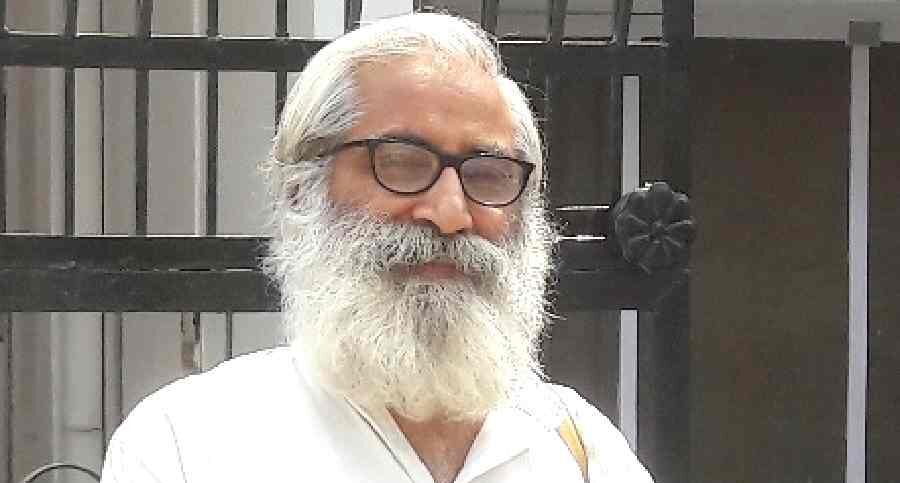
Author: Sandeep Pandey
Secretary General, Socialist Party (India)
The author is an atheist. While respecting the religious sentiments of his colleagues he does visit places of worship, he is certain that he will never visit the Ram Temple in Ayodhya, because its foundation rests not on religion but on politics.
A-893, Indira Nagar, Lucknow – 226016, Uttar Pradesh
Phone: 0522-2355978, 3564437
Email: ashaa…@yahoo.com
Leave a Reply